|
No. |
Photo |
Class |
Wheel Arrang't |
Builder's No & Year |
Status |
Location |
Notes |
|
5' 3" Gauge |
|||||||
|
N 244 |
|
N |
2-4-0WT |
Robert Stephenson 1184 of 1858 |
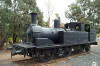
Remnants |
Leneva |
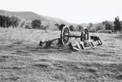
This
locomotive was originally No.7 ‘Meteor’ of the Melbourne and Hobson’s Bay
Railway Co, later becoming N 244 on the Victorian
Railways roster. It was sold to a railway construction contractor in 1886 and
ultimately dismantled for static uses. The frames and one set of wheels
survive in private ownership. |
|
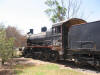
F 176 |
|
F |
2-4-2T |
Phoenix Foundry 61 of 1879 |
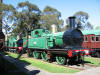
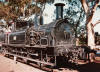
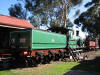
Display |
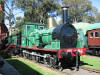
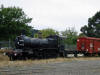
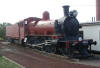
F 176 started its career as a 2-4-0 tender locomotive. It was rebuilt to 2-4-2T configuration in 1911 for use as a ‘motor engine’ on light traffic branch lines. Following withdrawal by the Victorian Railways in 1920, F 176 was sold to H. V. Mackay for shunting duties at their Sunshine Harvester Works. It was retired in 1961 and donated to the Australian Railway Historical Society (Victoria Division). |
|
|
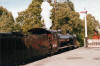
T 94 |
|
T |
0-6-0 |
Phoenix Foundry 144 of 1884 |
Display |
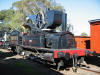
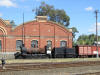
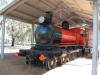
The Victorian Railways T-class locomotives
were a classic British inside-cylinder 0-6-0 designed for mixed traffic
duties. T 94 survived after many years
shunting at the Newport Power Station. It is displayed at the ARHS Museum at
North Williamstown. |
|
|
2 |
|
- |
0-6-0CT |
Dubs 2711 of 1890 |
Display |
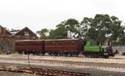
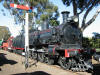
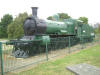
No.2
is a crane locomotive of 5 ton lifting capacity. It was mainly used at the
Newport Workshops before being written off by the Victorian Railways in
February 1970. |
|
|
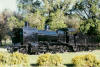
Z 526 |
|
Z |
0-6-0T |
Victorian Railways, built 1893 |
Display |
Scienceworks Museum, Spotswood, Melbourne |
Z
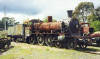
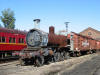
256 was the first locomotive built at Newport Workshops. It was
originally constructed to a conventional 0-6-0T configuration for trip and
suburban workings but was converted to 0-6-0CT crane-tank configuration in
1903. Polly was written off by the Victorian Railways as late as June 1978.
It was converted back to its original 0-6-0T form in 1983 for museum display. |
|
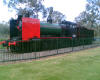
E 236 |
|
E |
2-4-2T |
David Munro & Co 18 of 1893 |
Display |
E
236 was originally used for Melbourne suburban trains prior to electrification
of the city railway network. |
|
|
E 369 |
|
E |
0-6-2 |
David Munro & Co 12 of 1892 |
Display |
E
369 was rebuilt to 0-6-2T from its original 2-4-2Tconfiguration; E 236
above represents the original design. |
|
|
E 371 |
|
E |
0-6-2 |
David Munro & Co 13 of 1892 |
Display |
Victorian
Goldfields Railway, Maldon |
E
371 was rebuilt to 0-6-2T from its original 2-4-2T configuration. It
survived into the 1970's as a shunter at Newport workshops. E 371 was
dismantled for assessment at Maldon in 1992 but the report was not favourable
and hence it was reassembled (sans boiler cladding, most fittings and
numberplates) and placed on display at Maldon station. |
|
Y 108 |
|
Y |
0-6-0 |
Phoenix Foundry 226 of 1889 |
Display |
Y
108 is statically displayed at the ARHS Railway Museum at North
Williamstown. |
|
|
Y 109 |
|
Y |
0-6-0 |
Phoenix Foundry 235 of 1889 (Converted to diesel |
Display |
Millewa Pioneer
Park, Millewa |
Y
109 was sold by the Victorian Railways to an industrial user at Nowingi,
where it was converted to a diesel-mechanical locomotive in 1956 by removing
the boiler and mounting a diesel engine and transmission on the frames; in
this guise it was known as ‘The Thing’. The remains of Y 109 ‘The Thing’ were
stored at Ballarat East Depot and yielded some parts to assist in the
restoration of sister locomotive Y 112. In 2008,Y 109 ‘The Thing’ was
reassembled, statically restored and placed on display at Millewa Pioneer
Park, in the region of its former operating domain of Nowingi. |
|
Y 112 |
|
Y |
0-6-0 |
Phoenix Foundry 238 of 1889 |
Operational |
Steamrail
Victoria, Ballarat East Depot |
Y
112 was plinthed at Ballarat during the 1970's and is owned by the
Sovereign Hill Museums Association. It was leased to Steamrail Victoria in
the 1980's and restored to mainline operation. Y 112 features an attractive lined
apple green livery and has performed various rail tours around Victoria
during the 1990's. It is normally based at Steamrail's Ballarat East
depot. |
|
V 499 |
|
V |
2-8-0 |
Replica |
Under construction |
Victorian
Goldfields Railway, Maldon |
The V-class 2-8-0 locomotives were
a classic Baldwin product of the 1890's and represented a major evolution in
Victorian Railways steam locomotives, being much larger than the 0-6-0's then
generally in freight service. All were scrapped but a group has formed to
build a replica to be known as V 499. |
|
K 151 |
|
K |
2-8-0 |
Victorian Railways, built 1940 |
Stored |
Steamrail
Victoria, Newport |
I believe K 151 ended its career as a stationary boiler. K 151 is now
partially stripped and stored in the depths of Newport Workshops, ostensibly
as heavy spares for sister locomotives. |
|
K 153 |
|
K |
2-8-0 |
Victorian Railways, built 1940 |
Operational |
Steamrail
Victoria, Newport |
K
153 had been under heavy overhaul by Steamrail volunteers after extensive
railtour use. It was released back into service in November 2003. |
|
K 154 |
|
K |
2-8-0 |
Victorian Railways, built 1940 |
Workshop |
Traralgon |
Upon withdrawal K 154 hauled a final tour train to Sale and subsequently ran
light (over temporary track) into the Gippsland Folk Museum at Moe, which
recreates an early Gippsland town scene. Here is was statically displayed but
eventually became derelict in the wet Gippsland climate. K 154 was acquired
by a new owner 'the K 154 Preservation Group' and is now the subject to an
interesting project to rebuild it as an N-class locomotive for use on
main-line tour trains. |
|
K 157 |
|
K |
2-8-0 |
Victorian Railways, built 1940 |
Stored |
Victorian
Goldfields Railway, Maldon |
K
157 is displayed in the goods yard at the Victorian Goldfields Railway's
Maldon station while it awaits restoration to working order. |
|
K 159 |
|
K |
2-8-0 |
Victorian Railways, built 1940 |
Plinthed |
Hamilton |
K
159 has been plinthed at Hamilton for many years. It was recovered by the
Mornington Railway Preservation Society in 1997 and transferred to Moorooduc
for eventual restoration. In its place a Hamilton, the Mornington Railway
Preservation Society assembled a replacement locomotive using expired
components. The locomotive at Hamilton comprises K 177's frames & coupled
wheels, K 174's pony truck & boiler and K 159's tender. |
|
K 160 |
|
K |
2-8-0 |
Victorian Railways, built 1940 |
Operational |
Victorian
Goldfields Railway, Maldon |
K
160 is preserved in operational condition on the Victorian Goldfields
Railway and is based at their Maldon depot. |
|
K 162 |
|
K |
2-8-0 |
Victorian Railways, built 1941 |
Plinthed |
Yarragon |
K
162 is plinthed at Yarragon but numbered K 183. This is because K 162 was
formerly operated as a railtour engine by Steamrail but became worn-out and
was swapped for K 183 (which was plinthed at Yarragon) in 1982. |
|
K 163 |
|
K |
2-8-0 |
Victorian Railways, built 1941 |
Operational |
Mornington Railway Preservation Society, Moorooduc |
K
163 was plinthed in a Frankston park until 1985 when obtained for
restoration by the fledgling Mornington Railway Preservation Society. It has
since become their regular running locomotive. |
|
K 165 |
|
K |
2-8-0 |
Victorian Railways, built 1941 |
Display |
K
165 is displayed at the Australian Railway Historical Society (Victoria
Division) museum at North Williamstown. |
|
|
K 167 |
|
K |
2-8-0 |
Victorian Railways, built 1941 |
Plinthed |
Wycheproof |
K
167 is plinthed near the railway station at Wycheproof. |
|
K 169 |
|
K |
2-8-0 |
Victorian Railways, built 1941 |
Display |
Coal Creek Museum, Korumburra |
K
169 and several carriages are displayed at a recreated station scene at
the Coal Creek Museum, Korumburra. Live steam piped to the whistle and
cylinder drain cocks to give the impression of K 169 being ready to depart the
station, although it never has! |
|
K 174 |
|
K |
2-8-0 |
Victorian Railways, built 1941 |
Stored |
Mornington Railway Preservation Society, Moorooduc |
K
174 was
plinthed in a park at Fitzroy until it was acquired by the Mornington Railway
Preservation Society and moved to Moorooduc by road on 18 May 1997. |
|
K 175 |
|
K |
2-8-0 |
Victorian Railways, built 1941 |
Plinthed |
Mildura |
K
175 is plinthed in a Mildura park. |
|
K 176 |
|
K |
2-8-0 |
Victorian Railways, built 1941 |
Stored |
K
176 had been plinthed for many years at Deniliquin, NSW, and displayed on
the old turntable. It was subsequently acquired by Seymour Railway Heritage
Centre for future restoration. |
|
|
K 177 |
|
K |
2-8-0 |
Victorian Railways, built 1941 |
Workshop |
Mornington Railway Preservation Society, Moorooduc |
K
177 had been an outdoor exhibit at the Langhi Morgala Museum at Ararat in
Western Victoria. K 177 was subsequently acquired by the Mornington Railway
Preservation Society for restoration to operation. |
|
K 181 |
|
K |
2-8-0 |
Victorian Railways, built 1943 |
Plinthed |
Numurkah |
K
181 is plinthed in a park at Numurkah. It is displayed alongside a faux
station platform, with the station canopy acting as a weather roof over the
locomotive. |
|
K 183 |
|
K |
2-8-0 |
Victorian Railways, built 1943 |
Operational |
Steamrail
Victoria, Newport |
K
183 had been plinthed in a park at Yarragon. In 1982 the locomotive unit
was swapped for worn-out sister K 162 and restored for main-line excursions. Update:
K 183 was damaged in a tragic accident on Sunday 13 October 2002, killing
three of the footplate crew and severely injuring a fourth. After 19 years stored
damaged at Newport Workshops, K 183 was repaired and returned to service in late
2021. |
|
K 184 |
|
K |
2-8-0 |
Victorian Railways, built 1945 |
Stored |
Steamrail
Victoria, Newport |
K
184 was used on railtour duty by Steamrail Victoria until 1980. It has
since been stored at Newport Workshops. |
|
K 190 |
|
K |
2-8-0 |
Victorian Railways, built 1946 |
Operational |
Steamrail
Victoria, Newport |
K
190 is maintained by Steamrail Victoria and based at Newport Workshops.
During the 1990's it wore an attractive apple green livery and was hired for
a period to the South Gippsland Railway. |
|
K 191 |
|
K |
2-8-0 |
Victorian Railways, built 1946 |
Stored |
Mornington Railway Preservation Society, Moorooduc |
K
191 had been plinthed in a park in Wangaratta. The Mornington Railway
Preservation Society acquired K 191 and road-hauled the locomotive to their
Moorooduc base in February 2001. K 191 is now dismantled and under restoration
at the MRPS depot at Moorooduc. |
|
K 192 |
|
K |
2-8-0 |
Victorian Railways, built 1946 |
Display |
State Mine Museum, Wonthaggi |
K
192 had been plinthed in Apex Park, Wonthaggi from 1968 to 1998, where it
carried the identity K 170. In 1998 it moved to the State Mine Museum,
Wonthaggi, where it has since been returned to its original number K 192 and
cosmetically restored including new boiler clothing and repainting. |
|
J 507 |
|
J |
2-8-0 |
Vulcan Foundry 6053 of 1954 |
Plinthed |
Mulwala, NSW |
J
507 is one of the first 30 J class locos (J500-J529) which were coal
burners. While most J-class locos were scrapped between 1968 and 1970, J 507
survived a few years longer after being retained as a shunter at Newport
workshops from 1970 to 1972. J 507 is now plinthed in a lakeside park at
Mulwala, NSW. |
|
J 512 |
|
J |
2-8-0 |
Vulcan Foundry 6058 of 1954 |
Workshop |
J
512 survived a few years longer than most of her sisters after being
retained as a shunter at Newport Workshops from 1970 to 1972. It is now the
subject of an interesting project to convert it to standard gauge, for which
the J-class locomotives were originally designed but none were ever
converted. This work includes narrowing the frames and adjusting the wheels
centres on the axles. |
|
|
J 515 |
|
J |
2-8-0 |
Vulcan Foundry 6061 of 1954 |
Operational |
J
515 became the last J-class used by the Victorian Railways when retired
from shunting duties at Newport Workshops in 1978. In 1984 it was transferred
to Seymour for restoration, becoming the founding project of the Seymour
Railway Heritage Centre. J 515 has been beautifully restored to mail line
operation and is now named HAROLD P. WARD. |
|
|
J 516 |
|
J |
2-8-0 |
Vulcan Foundry 6062 of 1954 |
Under overhaul |
Yarra Valley Railway, Healesville |
J
516 had been plinthed in the Melbourne suburb of Greensborough from 1975
until acquired by Healesville Railway Co-operative and transferred to
Healesville in 1990. It is now being restored for operation on the Yarra Valley
Railway. |
|
J 524 |
|
J |
2-8-0 |
Vulcan Foundry 6070 of 1954 |
Plinthed |
Donald |
J
524 has been plinthed in a park in the Victorian wheat belt town of
Donald since 1968. |
|
J 536 |
|
J |
2-8-0 |
Vulcan Foundry 6082 of 1954 |
Workshops |
R707
Operations, Newport |
J
536 is one of the 30 J class locos (J 530-J 559) which were built as oil
burners. J 536 was purchased by Colac City Council in 1970 and plinthed at
Colac station from 1972. In 1997 it was acquired by West Coast Railway and
moved to their site at the old Ballarat East Depot. J 536 was acquired by R
707 Operations Inc. during 2004 and transferred to Newport, where it is being
dismantled for restoration. |
|
J 539 |
|
J |
2-8-0 |
Vulcan Foundry 6085 of 1954 |
Plinthed |
Dimboola |
J
539 is an oil burner. It was purchased for preservation in 1974 and
plinthed in the Victorian wheat belt town of Dimboola in 1975. |
|
J 541 |
|
J |
2-8-0 |
Vulcan Foundry 6087 of 1954 |
Operational |
Victorian
Goldfields Railway, Maldon |
J
541 was privately purchased for preservation in 1977 and subsequently
stored at a number of locations within Victoria. It had been stored (together
with sister J 516) at the Yarra Valley Tourist Railway, Healesville from the
1980's until December 2003 when it was transferred to the Menzies Creek
Museum of the Puffing Billy Railway, for contact restoration. J 541's
contract restoration is now complete and it was transferred to Maldon on 15
June 2007. Following certification, its first day in service on the VGR was
on 5 September 2007. |
|
J 549 |
|
J |
2-8-0 |
Vulcan Foundry 6095 of 1954 |
Workshop |
Victorian
Goldfields Railway, Maldon |
J
549 was sold to the Castlemaine & Maldon Preservation Society for
preservation in 1979. Since restoration J 549 has been the regular service
loco on the Victorian Goldfields Railway. |
|
J 550 |
|
J |
2-8-0 |
Vulcan Foundry 6146 of 1954 |
For Restoration |
Noojee |
J
550 had been displayed at the old Mirboo North station from 1974 until
acquired by Steamrail in 1985 and moved to Warragul in exchange for A2 986.
After many years plinthed at Warragul, J550 was acquired by a preservation
group and transferred to Noojee on 27 March 2013 for intended restoration. |
|
J 556 |
|
J |
2-8-0 |
Vulcan Foundry 6152 of 1954 |
Display |
J
556 has been displayed at the ARHS museum at North Williamstown since
1968. It is preserved with the identity and number plates of scrapped sister
J 559, which was historically significant as in December 1954 it became the
last steam locomotive to enter service with the Victorian Railways.
(Unfortunately, the real J 559 was scrapped in December 1967.) |
|
|
C 10 |
|
C |
2-8-0 |
Victorian Railways, built 1922 |
Display |
The C-class 2-8-0 locomotives were designed for main-line service, with the first example completed at Newport Workshops in 1918. Modern features on these locomotives included electric lighting, automatic staff exchangers, Walschaerts valve gear and the standard Victorian Railways smokebox / front end design. Preserved class representative C 10 was withdrawn from Victorian Railways service in 1962. |
|
|
X 36 |
|
X |
2-8-2 |
Victorian Railways, built 1929 |
Display |
The X-class 2-8-2 were designed as
main line freight locomotives, with 29 built at the Victorian Railway's
Newport Workshops between 1929 and 1949. Preserved locomotive X 36 was the last class member in operation
when withdrawn from service in 1961. |
|
|
N 432 |
|
N |
2-8-2 |
Victorian Railways, built 1951 |
Display |
N
432 was the last steam locomotive built by the Victorian Railways at
their Newport Workshops. 83 N-class locomotives were constructed by Newport
Workshops (33) and the North British Locomotive Company, Glasgow (50). N 432
is the last original N-class locomotive surviving in Victoria and is
statically displayed at the ARHS Museum at North Williamstown. |
|
|
N 441 |
N 441 is a new-build project based on the frames of K 154 |
||||||
|
N 477 |
N 477 was sold to the South Australian Railways in 1951
and renumbered to 752. |
||||||
|
H 220 |
|
H |
4-8-4 |
VR Newport Workshops, built 1941 |
Display |
H
220 was designed as a 3-cylinder express passenger locomotive. When built
it was the largest and heaviest locomotive in Australia and earned the
nickname "Heavy Harry". |
|
|
D2 604 |
|
D2 |
4-6-0 |
Beyer Peacock & Co 5548 of 1912 |
Display |
D2 604 is the only surviving D2 locomotive and differs from
the D3 class by having a slightly smaller boiler. D2 604 was sold to Australian
Paper Manufacturers Ltd in 1956 for use as a shunter. It was converted to
oil-burning by APM & still has its converted tender, consisting of an
oil-burner A2 tender tank on a D2 tender frame. This photo of 10 May 2003
shows D2 604 displayed at the ARHS museum at North Williamstown. |
|
|
D3 608 |
|
D3 |
4-6-0 |
VR Newport Workshops, built 1915 |
Stored |
Steamrail
Victoria, Ballarat East Depot |
D3 608 had been plinthed in a park in Stawell for many
years until obtained by Steamrail Victoria in the mid-1980's. It was
transferred to Ballarat for storage around this time and apparently stripped
of corroded metal, including the tender tank. In more recent years it has
been stored at the Ballarat East Loco Depot. |
|
D3 619 |
|
D3 |
4-6-0 |
VR Newport Workshops, built 1914 |
Stored |
Victorian
Goldfields Railway, Maldon |
D3 619 had been plinthed at the Bendigo Railway Workshops
for many years. In the late 1990's the boiler clothing and other parts were
stripped and the loco assessed for restoration for main line operation, with
the intention that it would be used between Bendigo and Echuca. This
restoration initiative apparently stalled. D3 619 has now been acquired by
the Victorian Goldfields Railway and moved to Maldon on Thursday 5th January
2012. |
|
D3 635 |
|
D3 |
4-6-0 |
Baldwin 36888 of 1911 |
Display |
D3 635 is one of only a few Baldwin locomotives surviving
in Australia. |
|
|
D3 638 |
|
D3 |
4-6-0 |
VR Newport Workshops, built 1916 |
Stored |
Steamrail
Victoria, Ballarat East Depot |
D3 638 was plinthed in a park at Rosebud for many years. In
more recent times it has been stored at the Ballarat East Depot site of WCR
with sisters 608, 641 and 688. D3 638, D3 641 and D3 688 were purchased from
WCR by Steamrail Victoria in late 2004 and are now stored at the Steamrail
compound at Ballarat East depot. |
|
D3 639 |
|
D3 |
4-6-0 |
VR Newport Workshops, built 1903 |
Operational |
Steamrail
Victoria, Newport |
D3 639 was used to haul the VR Commissioner's inspection
train for many years. When the original D3 639 was withdrawn and scrapped,
sister loco D3 658 was renumbered to 639 in its place. Accordingly this
preserved locomotive occasionally carries the number D3 658. |
|
D3 640 |
|
D3 |
4-6-0 |
Thompsons of Castlemaine, 1 of 1914 |
Display |
D3 640 is displayed within the grounds of the excellent
Swan Hill Pioneer Settlement museum. It carried the number D3 688 when
originally preserved at Swan Hill, however was returned to its D3 640 number
in the 1970's by a group of rail enthusiasts. |
|
|
D3 641 |
|
D3 |
4-6-0 |
VR Newport Workshops, built 1915 |
Stored |
Steamrail
Victoria, Ballarat East Depot |
D3 641 was plinthed in a park at Beaufort for many years.
In more recent times it has been stored at the Ballarat East Depot site of
West Coast Railway with sisters 608, 638 and 688. D3 638, D3 641 and D3 688
were purchased from West Coast Railway by Steamrail Victoria in late 2004 and
are now stored at the Steamrail compound at Ballarat East depot. |
|
D3 646 |
|
D3 |
4-6-0 |
VR Newport Workshops, built 1905 |
Stored |
Victorian
Goldfields Railway, Maldon |
D3 646 had been plinthed outside the Maryborough railway
station until acquired in approximately 1994 by the Victorian Goldfields
Railway for eventual restoration to operation. |
|
D3 653 |
|
D3 |
4-6-0 |
Victorian Railways, built 1908 |
Plinthed |
Ballarat North Workshops |
D3 653 is plinthed at the entrance to the Ballarat North
workshops. |
|
D3 666 |
|
D3 |
4-6-0 |
Victorian Railways, built 1919 |
Plinthed |
Bayswater Park, Bayswater |
D3 666 is plinthed in Bayswater Park in the Melbourne
suburbs, where it is displayed in red livery and kept under a weather roof. |
|
D3 671 |
|
D3 |
4-6-0 |
Victorian Railways, built 1917 |
Plinthed |
Lismore |
D3 671 is plinthed in Brown's Waterhole Park, Lismore. |
|
D3 677 |
|
D3 |
4-6-0 |
Victorian Railways, built 1917 |
Stored |
Steamrail
Victoria, Newport |
D3 677 had been plinthed in a park at Ringwood for many
years until acquired by Steamrail and placed into storage at Newport.
Ostensibly the loco is kept as heavy spares for operable Steamrail loco D3
639. |
|
D3 684 |
|
D3 |
4-6-0 |
Walkers Ltd, Qld, 201 of 1913 |
Plinthed |
Seymour |
D3 684 is plinthed in a park near to the railway station. |
|
D3 688 |
|
D3 |
4-6-0 |
Victorian Railways, built 1912 |
Stored |
Steamrail
Victoria, Ballarat East Depot |
D3 688 had been displayed in a
park at Rosebud before being acquired by West Coast Railway. D3 638, D3 641
and D3 688 were purchased from West
Coast Railway by Steamrail Victoria in late 2004 and are now stored at the
Steamrail compound at Ballarat East depot. |
|
D4 268 |
|
D4 |
4-6-2T |
Victorian Railways, built 1910 |
Display |
D4 268 is the sole surviving example of the tank engine
version of the Victorian Railway's successful DD-class 4-6-0 design. The D4
class tank locomotives were used on Melbourne suburban train duties until
displaced by electrification. |
|
|
A2 884 |
|
A2 |
4-6-0 |
Victorian Railways, built 1913 |
Display |
A2 884 is fitted with Stephenson valve gear and is the only
remaining example of this earlier variant of A2 class express passenger
locomotive. |
|
|
A2 964 |
|
A2 |
4-6-0 |
Victorian Railways, built 1921 |
Plinthed |
Reservoir |
A2 964 is an example of the Walschaerts valve gear version
of A2 class and is one of only 5 class members fitted with Boxpok wheels. A2
964 has been plinthed for many years in Edwardes Park, Reservoir, in
Melbourne's northern suburbs. |
|
A2 986 |
|
A2 |
4-6-0 |
Victorian Railways, built 1915 |
Operational |
Steamrail
Victoria, Newport |
A2 986 was the very last A2 in service when
withdrawn in December 1963. It was plinthed in a Warragul park until acquired
by Steamrail Victoria in 1986 under a swap arrangement whereby J 550 was
plinthed at Warragul in its place. After many years of a slow but thorough
overhaul by Steamrail volunteers, A2 986 had its first team test in February
2014 and has since been released for main-line traffic on Steamrail
enthusiast tours. |
|
A2 995 |
|
A2 |
4-6-0 |
Victorian Railways, built 1916 |
Display |
A2 995 represents the later version of A2 express passenger
locomotive with Walschaerts valve gear and smoke deflectors. It makes for an
interesting comparison with the earlier Stephenson valve gear variant
represented by A2 884. |
|
|
A2 996 |
|
A2 |
4-6-0 |
Victorian Railways, built 1916 |
Display |
Echuca Wharf |
A2 996 had been displayed within the
preserved Echuca Wharf precinct for many years, keeping company with the
Murray River paddle steamers that operate from this historic location. In
2004 it was towed to the nearby old Echuca loco depot over the newly-relaid
wharf branch line as the first step towards intended restoration to main line
operation, but unfortunately this initiative lapsed. A2 996 remained stored
at old Echuca loco depot for more than 10 years until relocated back to the
Wharf precinct on 24 December 2015, where it will once again be statically
displayed. |
|
S |
|
S |
4-6-2 |
Victorian Railways (Newport Workshops), built 1928-1930 |
Tender only |
The four members of the S-class
were handsome 3-cylinder Pacific locomotives built to operate the 'Spirit of
Progress' express between Melbourne and Albury. The S-class locomotives were
quickly withdrawn following the arrival of main-line diesels and tragically
all four had been scrapped by 1954, but the tender tanks and underframes were
retained for other duties and several S-class
tenders are now held by preservation groups. |
|
|
R 700 |
|
R |
4-6-4 |
North British 26990 of 1951 |
Workshop |
Steamrail
Victoria, Newport |
R 700 had been stored at Newport Workshops since withdrawal by VR in 1964. In 2000 it was transferred to Ballarat East Depot for restoration by West Coast Railway and dismantled for overhaul. By 2012 it had been substantially reassembled and was transferred back to Newport Workshops where further restoration by Steamrail Victoria is proceeding. |
|
R 704 |
|
R |
4-6-4 |
North British 26994 of 1951 |
Display |
R
704 is notable for being displayed at the Exhibition of Industrial Power
for the Festival of Britain in Glasgow, 1951, prior to its delivery to the
Victorian Railways and carries a large commemorative number plate on the
cabside in recognition of this honour. It is preserved as a static exhibit at
the ARHS Railway Museum, North Williamstown. |
|
|
R 707 |
|
R |
4-6-4 |
North British 26997 of 1951 |
Operational |
R
707 Operations, Newport |
R
707 is one of the celebrity locomotives of Australian railway
preservation, thanks to the efforts of R 707 Operations who have maintained
the loco for many years for main-line railfan trips. R 707 is housed at
Newport Workshops and usually presented in immaculate black livery with red
lining. It now carries the name 'City of Melbourne'. |
|
R 711 |
|
R |
4-6-4 |
North British 27001 of 1951 |
Operational |
Steamrail
Victoria, Newport |
R
711 had been plinthed at Bendigo station until acquired by West Coast Railway
and extensively rebuilt with modifications including Lempor exhaust and
conversion to oil firing. R 711 is now leased by Steamrail Victoria and has
been certified for mainline use, receiving a striking new livery of blue with
gold stripe reminiscent of the VR 'Spirit of Progress' era and the long-lost
S-class pacific steam locomotives associated with that train. |
|
R 753 |
|
R |
4-6-4 |
North British 27043 of 1951 |
Stored |
R
707 Operations, Newport |
R
753 is owned by R 707 Operations. It has been stored at Newport Workshops
for many years, ostensibly as a future spare parts donor for popular mainline
performer R 707. In more recent times R 753 has been dismantled, presumably
to assess repairs and to permit more rapid component exchange with R 707 if
required. |
|
R 761 |
|
R |
4-6-4 |
North British 27051 of 1951 |
Operational |
Steamrail
Victoria, Newport |
R
761 is immaculately maintained by Steamrail Victoria at their Newport
Workshops base. It wears authentic black livery with red running boards and
“blinker” smoke deflectors. R 761 has delighted both rail fans and the public
with many fast main-line excursions over several decades of Steamrail
Victoria excursions, often double-heading with either R 707, R 711 or R 766. |
|
R 766 |
|
R |
4-6-4 |
North British 27056 of 1951 |
Operational |
Hunter Valley Railway Trust |
R
766 had been operational in the 1990's and wore an attractive but
non-original Canadian Red livery. In May 2005 came the interesting news that
R 766 had been leased to the Hunter Valley Railway Trust for conversion to
standard gauge. As at mid-2021 the conversion work is largely complete, with
R 766 now under road trials and expected to soon be released to traffic. |
|
- |
|
? |
? |
? |
Tender tank |
Donnybrook |
The Victorian Railways sold a number
of steam locomotive tenders for further use on farms etc. One example is this
ex-Victorian Railways tender tank to be found at Donnybrook, north of
Melbourne. |
|
2' 6" Gauge |
|||||||
|
3A |
|
NA |
2-6-2T |
Victorian Railways, built 1900 |
Stored, dismantled |
Puffing
Billy Railway, Belgrave |
3A
was allocated to the Moe-Walhalla narrow gauge line for part of its
operational career. Upon withdrawal, 3A was plinthed in a park at Portsea
until acquired by the Puffing Billy Railway in 1977. 3A was subsequently
dismantled but the boiler was found to be in poor condition and today the
frames, cylinders and wheels are stored while the boiler is displayed at
Menzies Creek Museum. Various proposals for the restoration of this historic
locomotive have been tabled over the years and hopefully one day it will be
reassembled for either display or operation. |
|
6A |
|
NA |
2-6-2T |
Victorian Railways, built 1901 |
Operational |
Puffing
Billy Railway, Belgrave |
The NA class represent a classic
Baldwin design, having supplied the initial two examples of this class (NA1
& NA2). The Victorian Railways subsequently built 15 further examples as
copies of the Baldwin design. 6A was
released to Puffing Billy Railway traffic early in 2002 after a lengthy and
thorough overhaul at their Belgrave depot. |
|
7A |
|
NA |
2-6-2T |
Victorian Railways, built 1905 |
Operational |
Puffing
Billy Railway, Belgrave |
7A
operates out of the PBR depot at Belgrave. |
|
8A |
|
NA |
2-6-2T |
Victorian Railways, built 1908 |
Operational |
Puffing
Billy Railway, Belgrave |
After being withdrawn by the
Victorian Railways in 1955, 8A was obtained by the Beaumaris Progress Association
and placed in Pasadena Park, Beaumaris. It was purchased by the Puffing Billy
Preservation Society (in exchange for playground equipment) in 1970. The loco
required extensive rebuilding, which began in 1976 and was completed in 1982.
8A has been restored to its late-1920s
condition with extended bunker & modified front end, tapered ‘stovepipe’
chimney, steel cow-catcher and unlined black livery. |
|
12A |
|
NA |
2-6-2T |
Victorian Railways, built 1912 |
Workshop |
Puffing
Billy Railway, Belgrave |
12A
operates out of the PBR depot at Belgrave. 12A entered the PBR workshop for a
full overhaul in 2006. |
|
14A |
|
NA |
2-6-2T |
Victorian Railways, built 1914 |
Operational |
Puffing
Billy Railway, Belgrave |
14A
operates out of the depot at Belgrave. |
|
G 42 |
|
G |
2-6-0 + 0-6-2 |
Beyer Peacock 6268 of 1926 |
Operational |
Puffing
Billy Railway, Belgrave |
G41 and sister G42 were
essentially a repeat of the earlier Ms-class design for the Western
Australian Government Railways but modified for 2' 6" gauge. Whilst G41
was scrapped, fortunately G42 was saved for preservation and displayed at the
Menzies Creek Museum for many years. Restoration to operation began in the
late 1980's, and G42 returned to service
on 11 March 2004 when she moved under her own steam for the first time in 42
years. |