|
No. |
Photo |
Class |
Wheel Arrang't |
Builder's No & Year |
Status |
Location |
Notes |
|
4' 8.5" Gauge |
|||||||
|
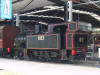
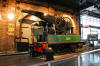
1 |
|
1 |
0-4-2 |
Robert Stephenson & Co 958 of 1854 |
Display |
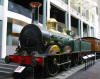
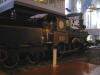
No.1
is displayed as a key exhibit in the Powerhouse Museum in Sydney. |
|
|
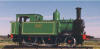
18 |
|
E(17) |
0-6-0 |
Robert Stephenson 1542 of 1866 |
Display |
Thirlmere |
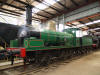
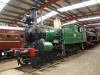
E
18 is an example of the classic Stephenson ‘Long Boiler’ 0-6-0 design of
freight locomotive. |
|
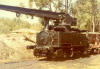
78 |
|
M(36) |
0-4-2 |
NSW Railways, built 1877 |
Display |
Thirlmere |
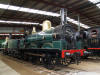
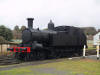
M
78 has an interesting history, having been built in 1877 to a much
earlier design as replacement of the original 1-class locomotives. |
|
79 |
|
- |
0-6-0ST |
Hunslet 1825 of 1938 |
Display |
Thirlmere |
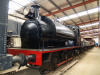
PWD
79 is a well-proportioned saddle tank engine that was built to a standard
industrial shunting locomotive design by the Hunslet Engine Company of
Yorkshire. |
|
128 |
|
P(127) |
0-6-0ST |
Vulcan Foundry 834 of 1879 |
Display |
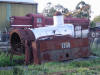
P
128 has survived into preservation despite a close encounter with scrap
metal collectors. While incomplete, it remains an interesting steam survivor. |
|
|
20N |
|
- |
0-6-0ST |
Kitson 1620 of 1870 |
Display |
Newcastle Museum |
20N
is displayed as a prime exhibit in the new Newcastle Museum in the former
Honeysuckle Workshops. |
|
1021 |
|
(X)10 |
0-4-0ST |
Manning Wardle 1896 of 1916 |
Display |
Thirlmere |
1021
was built by Manning Wardle & Co to their standard ‘H-Class’ design of
industrial & construction locomotive and was one of five imported by the
NSW Public Works Department. 1021 has been cosmetically restored and placed
on display within the theatrette of the new exhibition building at Thirlmere.
It wears a beautiful lined royal blue livery. |
|
1022 |
|
(X)10 |
0-4-0ST |
Vulcan Iron Works 2505 of 1916 |
Under restoration |
1022
and sister 1023 were built to a standard Vulcan Iron Works shunting design.
In NSWGR service they were used for many years as roundhouse shunters at the
Enfield steam loco depot. Today 1022 is under heavy overhaul at Valley
Heights following significant damage sustained in an arson attack in June
1993 |
|
|
1024 |
Refer to the Victorian Private & Industrial
Locomotives entry for ‘Newbold’ |
||||||
|
1033 |
|
(X)10 |
2-4-0T |
Beyer Peacock 2661 of 1885 |
Display |
Thirlmere |
1033
is one of a class of 18 F(351)-class locomotives originally used for Sydney
suburban trains, but later relegated to workshop shunting duties. |
|
1034 |
|
(X)10 |
0-4-0CT |
Dubs 2250 of 1886 |
Display |
Thirlmere |
1034
is a crane tank locomotive. It has been statically restored and placed on
display within the new Trainworks exhibition building. |
|
1042 |
|
(X)10 |
2-4-0T |
Henry Vale 38 of 1887 |
Under restoration |
Maitland |
1042
is an F351-class loco originally built for Sydney suburban trains and ended its
career as the Cardiff Workshops shunter. 1042 is now under restoration at a
new railway workshop facility in Maitland. |
|
1052 |
|
(X)10 |
0-4-0CT |
Hawthorn Leslie 3035 of 1914 |
Stored |
Dorrigo |
1052
is a luffing crane tank locomotive with max. 7 ton crane capacity. It was
sold to the DSR&M for preservation in November 1976. |
|
1064 |
|
(X)10 |
4wvb |
Alfred Harman Engineering Works, Port Melbourne |
Operational |
Thirlmere |
Coal Grab 1064 was restored at the NSWRTM between 2008 and 2010. It
is now maintained in working order and used for coaling locomotives in the
NSW Rail Museum running depot. |
|
1067 |
|
(X)10 |
0-4-0CT |
Hawthorn Leslie 3564 of 1923 |
Stored, dismantled |
Dorrigo |
1067
is a luffing crane tank locomotive with max. 7 ton crane capacity. 1067 was
acquired by the DSR&M in a dismantled state after the NSWGR had
dismantled the locomotive for an overhaul which subsequently did not proceed.
|
|
1068 |
|
(X)10 |
0-4-0CT |
Hawthorn Leslie 3565 of 1924 |
Stored |
Dorrigo |
1068
is a luffing crane tank locomotive with max. 7 ton crane capacity. It was
withdrawn by the NSWGR from Cardiff Workshops in May 1975. |
|
1076 |
|
(X)10 |
0-6-0T |
Vulcan Foundry 995 of 1885 |
Operational |
1076
was originally numbered R 288 and later 1804 of the Z18 class. At a later
stage a crane was fitted behind the cab, and it became 1076 of the X-10 class
of miscellaneous obsolete locomotives, workshop shunters and mobile cranes.
1076 had been in long term storage at NSWRTM Thirlmere for several decades
until transferred to Goulburn Roundhouse in 2008. After a full restoration by
volunteers at Goulburn Roundhouse, 1076 was returned to operation in 2017 –
an amazing transformation after its many years of storage. |
|
|
1082 |
|
(X)10 |
0-4-0CT |
Robert Stephenson & Hawthorns 7542 of 1950 |
Stored |
Castle Hill Discovery Centre |
1082
and 1083 were the final orders of a series of 0-4-0 crane tank locomotives
ordered by the NSWGR following from 1030 back in 1879. These small steam
crane locomotives outlasted mainline steam by nearly a decade, with 1082 and
1083 pottering around Eveleigh workshops until withdrawn in the early 1980's. |
|
1083 |
|
(X)10 |
0-4-0CT |
Robert Stephenson & Hawthorns 7543 of 1950 |
Plinthed |
Advanced Technology Park, Eveleigh |
1082 and 1083 were the final orders of a series of 0-4-0 crane tank
locomotives ordered by the NSWGR following from 1030 back in 1879. These
small steam crane locomotives outlasted mainline steam by nearly a decade,
with 1082 and 1083 pottering around Eveleigh workshops until withdrawn in the
early 1980's. |
|
1210 |
|
(Z)12 |
4-4-0 |
Beyer Peacock & Co 1767 of 1878 |
Display |
1210
has the distinction of being the first locomotive to work into Canberra (in
1913) and had been plinthed at Canberra Railway Station since 1962. It was
removed from its plinth in 1984, overhauled by ARHS (ACT division) volunteers
and returned to operation in 1988, following funding from the Australian
Bicentennial Authority. 1210
has since been based at the Canberra Railway Museum and generally available for
tourist and enthusiast trains, excepting periods of maintenance. |
|
|
1219 |
|
(Z)12 |
4-4-0 |
Dubs 1270 of 1880 |
Stored |
Chullora Heritage Hub NSW) |
1219
remains
in its worn ‘as withdrawn’ condition since retirement in 1963 and shows the
effects of many years of open storage, with significant surface rust and the
timber cab roof heavily decayed. 1219 is unusual for a (Z)12 class loco in
featuring an extended smokebox and paired with a larger P(6) class tender
rather than the original low-sided type. 1219 finally moved into covered
storage at Thirlmere in late 2004 before being rail hauled to Broadmeadow
Loco in August 2008 for secure undercover storage. It moved to the Chullora
Heritage Hub in February 2024 for further storage and conservation. |
|
1243 |
|
(Z)12 |
4-4-0 |
Atlas Engineering 2 of 1882 |
Display |
1243
is somewhat of a celebrity locomotive, having featured in the NSWGR Centenary
Celebrations of 1955 before being retained for use on Vintage Train duties
from 1960. In 1970 it featured in a Ned Kelly movie starring Mick Jagger.
1243 had been an operational exhibit at the NSWRTM Thirlmere where it
regularly performed on Loop Line trains, until withdrawn around 1982. During
the late 1980's it was immaculately restored to an authentic configuration
with short smokebox and low-side tender, prior to being placed on displayed
as a key exhibit in the Powerhouse Museum’s transport hall. |
|
|
1301 |
|
(Z)13 |
4-4-2T |
Beyer Peacock & Co 1624 of 1877 |
Display |
Thirlmere |
1301
is beautifully presented at the NSW Rail Museum, Thirlmere, having been
statically restored by volunteers. |
|
1307 |
|
(Z)13 |
4-4-2T |
Beyer Peacock & Co 1637 of 1877 |
Static |
1307
was in storage at the NSWRTM Thirlmere for many years before being repainted
and placed on display at the Yass Railway Museum. |
|
|
1308 |
|
(Z)13 |
4-4-2T |
Beyer Peacock & Co 1620 of 1877 |
Workshop |
1308
is an unlucky locomotive, having been extensively damaged during an arson
attack in 1993. It is slowly being restored at Valley Heights, where the
various dismantled components can be seen in varying stages of repair around
the railway museum roundhouse site. |
|
|
1709 |
|
(Z)17 |
4-4-0 |
Vulcan Foundry 1172 of 1887 |
Display |
Thirlmere |
1709 survived into preservation after being
retained by the New South Wales Government Railways for ‘Vintage Train’
duties in the early 1960’s. 1709 later passed into the care of the New South
Wales Rail Transport Museum at their Enfield Roundhouse base. 1709 was
withdrawn from NSWRTM tour train duties and placed on static display at
Thirlmere around 1975. In 1994 it was restored for use in the celebration of
140 years of NSW Railways during 1995. 1709 was again reactivated for the NSW
Railways’150 years celebrations in 2005. 1709 / H 381 is now statically
displayed at Thirlmere. |
|
1803 |
|
(Z)18 |
0-6-0T |
Vulcan Foundry 994 of 1884 |
Display (Special events only) |
Thirlmere |
1803
began life as one of a class of 6 ‘R 285’ class locomotives for Sydney
suburban passenger trains. After many years of storage while awaiting
restoration, 1803 has recently been statically restored in the guise of
‘Thomas the Tank Engine’ for use at special events. |
|
1804 |
Refer to 1076 above |
||||||
|
1904 |
|
(Z)19 |
0-6-0 |
Beyer Peacock & Co 1646 of 1877 |
Stored |
DSR&M
Dorrigo |
1904
was one of 77 examples of the A(93) class freight locomotives designed for
heavy freight duties, a development of the earlier E(17) class Stephenson
'long-boiler' design (refer E18 above). These engines were later used as
branch-line locomotives, particularly on the steep and lightly-laid 'pioneer'
lines to Oberon, Dorrigo, Tumut & Batlow, and as yard shunting
locomotives at Darling Harbour. 1904 was retired as late as 1972 and saved by
the DSR&M. |
|
1905 |
|
(Z)19 |
0-6-0 |
Beyer Peacock & Co 1647 of 1877 |
Display |
Thirlmere |
1905
earned a special place in history as the first locomotive to cross the Sydney
Harbour Bridge, albeit on a construction works train. It has been expertly
restored by volunteers and is statically displayed at Thirlmere. |
|
1919 |
|
(Z)19 |
0-6-0 |
Beyer Peacock & Co 1761 of 1878 |
Workshop |
Glenreagh West |
1919
was initially preserved by the Lachlan Vintage Village at Forbes, being
plinthed as gatekeeper in 1979 and painted a gaudy sky-blue livery. 1919 was
acquired by the Dorrigo Steam Railway & Museum in 1986 but later passed
to the Glenreagh Mountain Railway, where it was returned to service in July
2004. 2023 brought a change of direction for the Glenreagh Mountain Railway,
with all assets transferred to Tallowood Ventures. Repair work on 1919 is now
underway, supported by grant funding. |
|
1923 |
|
(Z)19 |
0-6-0 |
Beyer Peacock & Co 1890 of 1879 |
Stored |
Dorrigo |
1923
and sister 1904 lasted nearly to the very end of NSWGR steam, having been
retained at Port Waratah depot as shunters and with the special duty of
replenishing the coal stage. 1923 was purchased for preservation with the
DSR&M collection and has been stored at Dorrigo for many years. |
|
2029 |
|
(Z)20 |
2-6-4T |
NSW Government Railways 28 of 1911 |
Display |
Thirlmere |
2029
is the last survivor of the Z-20 class, which were a tank-engine version of
the Z-19 class. A thorough static restoration of this locomotive was
completed by NSWRTM volunteers during the 1980's and 90's, resulting in a
very high standard of presentation and authenticity. The magnificently
restored 2029 is now a prime exhibit in the display hall at Thirlmere. |
|
2408 |
|
(Z)24 |
2-6-0 |
Dubs & Co. 2631 of 1891 |
Stored |
Dorrigo |
The B(55)-class (later renamed the
Z24 class) comprised 25 locomotives built by Dubs & Co of Scotland.
Originally main-line freight locos, they eventually gravitated to secondary
lines and then shunting roles. 2408 was one four sold to the Electricity
Commission of NSW for use at Bunnerong Power Station. 2408 was later donated to the DSR&M. |
|
2413 |
|
(Z)24 |
2-6-0 |
Dubs & Co. 2635 of 1891 |
Display |
2413
was last used by the Bunnerong Power Station as their No.6. Upon retirement
in 1975 it was donated to the ARHS Canberra and displayed in their museum.
2413 was transferred to the Junee Roundhouse Museum in May 2002 for static
display. |
|
|
2414 |
|
(Z)24 |
2-6-0 |
Dubs & Co. 2636 of 1891 |
Stored |
Dorrigo |
2414
was acquired second-hand from the NSWGR in 1959 by the Electricity Commission
of NSW for use shunting the Bunnerong Power Station, Port Botany where it
became No.5. In 1967 it became a parts donor for sister 2408 and the remains
were donated to the DSR&M in 1975. 2414 is now stored at Dorrigo. |
|
2419 |
|
(Z)24 |
2-6-0 |
Dubs & Co. 2641 of 1891 |
Display |
2419
remained with the NSWGR for its entire working life. Upon preservation it was
restored to near-original appearance using a round-top boiler salvaged from
scrapped 2604 in place of the later Belpaire boiler and displayed with its
original number B 390. In 1985 it was transferred to the Goulburn Roundhouse
for display. |
|
|
2510 |
|
(Z)25 |
2-6-0 |
Beyer Peacock & Co. 2082 of 1881 |
Display |
Thirlmere |
2510
was one of the early exhibits saved for preservation by the New South Wales
Rail Transport Museum. It received a very thorough and lengthy static
restoration by a group of volunteers and is proudly displayed in the exhibit
hall at Thirlmere where it wears black livery. A nice finishing touch to its
display is the headlight, marker and cab lights are lit, which adds life to
the exhibit. |
|
2535 |
|
(Z)25 |
2-6-0 |
Beyer Peacock & Co 2322 of 1884 |
Stored |
Dorrigo |
2535
outlived its sisters thanks to private ownership by Australian Iron &
Steel (AIS). It was initially plinthed at the AIS Visitors Centre at Coniston
and later acquired for the Dorrigo Steam Railway & Museum collection. |
|
2605 |
|
(Z)26 |
2-6-2ST |
Dubs & Co. 2794 of 1891 |
Display |
State
Mine Heritage Park & Museum, Lithgow |
The twenty members of the I(17)
class were essentially a saddle-tank version of the B(55) class 2-6-0 tender
locomotives and intended for banking duties over steep grades such as the
Great Western Railway (Blue Mountains line). 2605
survived into preservation after being sold into industrial service at the
Portland Cement Company. It lasted in service at their Portland cement works
until as late as 1983. |
|
2606 |
|
(Z)26 |
2-6-2ST |
Dubs & Co. 2795 of 1891 |
Stored |
Chullora Heritage Hub NSW) |
2606
had been displayed at the NSWRTM in until 2008 when it was towed to
Broadmeadow roundhouse for covered storage. Unfortunately, 2606 is no longer
on public display. It moved to the Chullora Heritage Hub in February 2024 for
further storage and conservation. |
|
2705 |
|
(Z)27 |
2-6-0 |
Hunslet 1115 of 1913 |
Operational |
Thirlmere |
2705
is the last survivor of 8 members of the (Z)27 class, which were purchased by
the Department of Public Works for railway construction duties. The class
were rebuilt by the NSWGR with (Z)25 class boilers and 3650-gallon tenders.
2705 was displayed as a static exhibit at the Thirlmere until restored to
operation around 1994 and is now a regular locomotive on Thirlmere-Buxton
tourist trains. |
|
3001 |
|
(C)30T |
4-6-0 |
Beyer Peacock & Co 4444 of 1903 |
Operational |
Thirlmere |
3001
was built as a 4-6-4T for Sydney suburban operations. It was converted to
4-6-0 tender configuration after electrification of the Sydney suburban lines
and redeployed to country branches. It later received a superheated boiler
and other improvements. 3001 was restored to operation by the NSWRTM during
the early 1980's but was withdrawn in around 1997 due to deteriorating
mechanical condition. It is now displayed as a static exhibit at Thirlmere. |
|
3013 |
|
(C)30 |
4-6-4T |
Beyer Peacock & Co 4456 of 1903 |
Dismantled |
3013
survived into preservation following its sale to Hebburn Colliery in 1967 and
remained in private use in the Cessnock coalfield until about 1973. It is now
stored dismantled at the ARHS Museum in Canberra. |
|
|
3016 |
|
(C)30T |
4-6-0 |
Beyer Peacock & Co 4459 of 1903 |
Workshop |
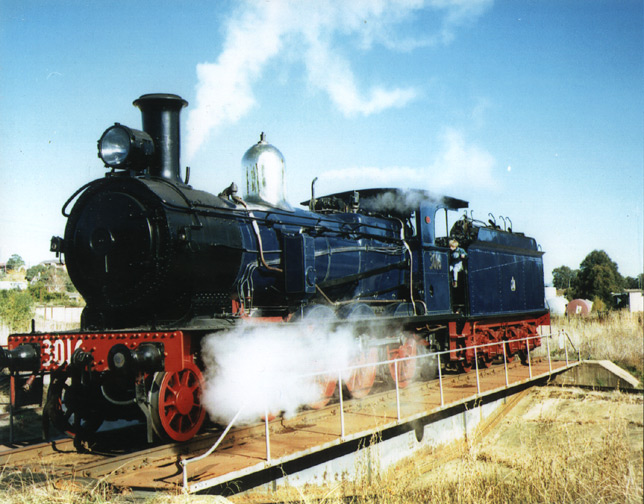
3016 and saturated 3102 were saved for
preservation by the Australian Railway Historical Society (ACT Division) and
have been resident at the Canberra Railway Museum since the mid-1970’s. 3016
wore an attractive Prussian Blue livery with red wheels from the late 1980’s
through the 1990’s, giving the locomotive a distinctly German look. In more
recent times it has received an authentic black livery. 3016 was withdrawn in
2019 and fundraising is underway towards a return to service. |
|
|
3026 |
|
(C)30T |
4-6-0 |
Beyer Peacock & Co 4469 of 1903 |
Display |
3026 represents the (C)30 class as
originally converted, retaining a short smokebox and saturated steam boiler.
It is paired with an antique 6-wheel Beyer Peacock tender originally from a
(Z)16-class 4-4-0 engine. 3026 is normally resident at Cowra roundhouse and
had been operational from the 1970s to the 1990’s but is currently under
overhaul. |
|
|
3028 |
|
(C)30T |
4-6-0 |
Beyer Peacock & Co 4471 of 1904 |
Stored |
Dorrigo |
3028
was originally built as a 4-6-4T for Sydney suburban train operations.
Following electrification of the Sydney suburban railways, it was rebuilt to
a 4-6-0 tender configuration for use on country branch lines. 3028 operated
the re-opening train to Dorrigo in 1986 (with 5069) and is now stored in
black-oil in Dorrigo station yard. |
|
3046 |
|
(C)30 |
4-6-4T |
Beyer Peacock & Co 5140 of 1908 |
Stored |
Dorrigo |
3046
is stored for the Dorrigo Steam Railway & Museum collection. |
|
3075 |
|
(C)30T |
4-6-0 |
NSW Government Railways 42 of 1912 |
Plinthed |
Parkes |
3075
is plinthed in Parkes in central western NSW. |
|
3085 |
|
(C)30 |
4-6-4T |
NSW Government Railways 52 of 1912 |
Stored |
3085
was the last (C)30 tank locomotive in NSWGR service when withdrawn in 1972.
Loco 3085 was statically displayed at NSWRTM Thirlmere until relocated to the
Goulburn Roundhouse on 27 November 2009, where it stayed for nearly 15 years.
3085 moved to Oberon in July 2024 for static restoration by volunteers at the
Oberon Tarana Heritage Railway. |
|
|
3090 |
|
(C)30T |
4-6-0 |
NSW Government Railways 57 of 1912 |
Stored |
Dorrigo |
3090
was originally built as a 4-6-4T for Sydney suburban train running. Following
electrification of the Sydney suburban railways, it was rebuilt to a 4-6-0
configuration for use on country branch lines. |
|
3102 |
|
(C)30T |
4-6-0 |
Beyer Peacock & Co 5797 of 1912 |
Stored |
3102
was built as a 4-6-4T for Sydney suburban train running. Following
electrification of the Sydney suburban railways, it was rebuilt to 4-6-0
configuration for use on country branch lines. 3102 had been maintained
operational by the ARHS Canberra during the 1970's and 80's. It was withdrawn
from ARHS service in August 1987 (with 3016 being returned to operation in
its place) and has since been stored awaiting overhaul. |
|
|
3112 |
|
(C)30 |
4-6-4T |
Beyer Peacock & Co 5807 of 1914 |
Stored Operational |
3112
was purchased privately in 1986 and restored to operation in 1988, following
which it saw extensive railtour use. 3112 changed hands in 2007 and the new
owner has arranged storage in Canberra on a private siding adjacent to the
Canberra Railway Museum. Although nominally operational, I understand 3112 is
not currently in use. It has since moved to Goulburn. |
|
|
3137 |
|
(C)30 |
4-6-4T |
NSW Government Railways 134 of 1917 |
Display |
Thirlmere |
3137
had been a stalwart of the NSWRTM operating fleet during the 1970's and 80's
and regularly hauled the Museum's ‘Loop Line’ train between Picton, Thirlmere
and Buxton. It is now a static exhibit in the exhibit hall, Thirlmere. |
|
3203 |
|
(C)32 |
4-6-0 |
Beyer Peacock & Co 3402 of 1891 |
Display |
Cooma |
3203
was an operational exhibit at the NSWRTM Thirlmere during the 1970's but was
later retired due to deteriorating boiler condition and became a static
exhibit. 3203 was stored at Broadmeadow Roundhouse from 2008 but a change of
fortunes has seen the loco placed on long-term loan to the Cooma Monaro
Railway, arriving at Cooma Station on 10 May 2023 for display. |
|
3214 |
|
(C)32 |
4-6-0 |
Beyer Peacock & Co 3413 of 1892 |
Display |
3214
was an operational exhibit at the NSWRTM Thirlmere during the 1970's until
withdrawn in 1982 due to boiler condition and placed on static display. 3214
had worn an attractive maroon livery when operational but was repainted into
basic unlined black livery in 1988. 3214 has since moved to the Valley
Heights Locomotive Depot Heritage Museum where it has received a thorough
restoration and repainting to lined green livery for static display. |
|
|
3237 |
|
(C)32 |
4-6-0 |
Beyer Peacock & Co 3436 of 1892 |
Operational |
3237
was numbered P 508 prior to the NSWGR 1924 renumbering scheme. It was based
at Cowra during its later NSWGR service and therefore has found a fitting
home in preservation at the Cowra roundhouse. 3237 had been dismantled since
the 1980's under a protracted overhaul which included a new front tube-plate.
The overhaul was completed with 3237's return to steam in mid-2005, following
which it has found much use on main-line duties. |
|
|
3265 |
|
(C)32 |
4-6-0 |
Beyer Peacock & Co 4221 of 1901 |
Operational |
Thirlmere for the |
3265
has been extensively rebuilt and overhauled by volunteers at Eveleigh by the
Powerhouse Museum, including provision of a new welded boiler, and now
proudly wears its historic ‘Hunter’ nameplates and maroon livery in
recollection of its days at the head of the Newcastle Limited express in the
1920’s. 3265 is generally based at the NSW Rail Museum, Thirlmere and is
often steams for various tours, festivals etc. |
|
3526 |
|
(C)35 |
4-6-0 |
NSW Government Railways 118 of 1917 |
Operational |
Thirlmere |
3526 served
as a NSWRTM tour engine during the early 1970’s and transferred in steam to
the NSWRTM Thirlmere in 1975 but was subsequently relegated to static
display. In 1983 the boiler clothing was removed for assessment of the
boiler, and in 1990 full overhaul began in earnest. Completion was achieved
in early 2004 after a government grant to fund new boiler tubes, after which
3526 performed on many heritage and enthusiast tours. Recent works have seen
3526 under heavy overhaul in the workshops at the NSW Rail Museum Thirlmere,
including construction of a new tender frame and tank. |
|
3609 |
|
(C)36 |
4-6-0 |
NSW Government Railways 156 of 1928 |
Display |
3609
had been statically displayed at the NSWRTM Thirlmere for many years,
originally in lined green livery and, after 1988, in lined black livery. From
time to time it provided spare parts to sister 3642 via component exchange,
including a driving wheelset, with 3609 subsequently returned to display.
3609 had been stored in the workshop sidings at Thirlmere in more recent
years and became somewhat derelict. It was transferred to the Junee
Roundhouse Museum in January 2019 and has since been repaired and repainted,
becoming a prime static display exhibit at Junee. |
|
|
3616 |
|
(C)36 |
4-6-0 |
Clyde Engineering 400 of 1927 |
Stored |
Thirlmere |
3616
is unique as the only Australian steam locomotive fitted with a Giesl
ejector, in which form it is preserved at the NSW Rail Museum, Thirlmere.
3616 had been statically displayed in lined green livery at the NSWRTM during
the 1970's but had become faded and rust-streaked by 1988 when it was
repainted in unlined black. Unfortunately it is no longer on public display,
instead being stored near the workshop at Thirlmere since the redevelopment
of the NSWRTM as ‘Trainworks’ (now NSW Rail Museum). |
|
3642 |
|
(C)36 |
4-6-0 |
Clyde Engineering 376 of 1926 |
Operational |
Thirlmere |
3642
has been a key main-line traffic locomotive in the NSWRTM fleet for many
decades, working numerous tours to various destinations and heritage events.
It has received a number of heavy overhauls during its preservation career,
including a boiler exchange at Goulburn Workshops in 1980. 3642 was withdrawn
from service in the late 1990’s and statically displayed at Thirlmere for
several years until funding for overhaul was announced in 2006, culminating
in a further boiler exchange (using one of several spare (C)36 class boilers
retrieved from static use) and re-launch to traffic on 1 March 2008. Tours
using 3642 are often marketed under the Heritage
Express ‘Legends of Steam’ brand, leveraging the loco’s authentic and
attractive lined green livery and reputation for spirited main-line running. |
|
- |
|
(C)36 |
4-6-0 |
NSW Government Railways |
Static / spare boilers |
Various locations |
The
New South Wales Government Railways apparently favoured (C)36 class boilers for use
as stationary steam plant at their various railway workshops, with a significant
number surviving in this role for several decades after the demise of steam
traction. Several (C)36 class boilers have since been obtained by railway
preservation groups, either as spares, curios or exhibits. A notable bank of
four such boilers form part of the industrial heritage at the Advanced
Technology Park, Redfern, located at the former Eveleigh Railway Workshops. |
|
3801 |
|
(C)38 |
4-6-2 |
Clyde Engineering 463 of 1943 |
Operational |
Thirlmere |
3801
is Australia's most famous locomotive and has been in rail tour duty for many
years. It was out of service from November 2007, finally returning to
operation in early 2020 after 12 years of overhaul and boiler repairs. 3801
has been repainted in preparation for re-launch on the weekend of 28 & 29
March 2020, but alas that ceremony had to be postponed amid the COVID-19
pandemic response. |
|
3813 |
|
(C)38 |
4-6-2 |
NSW Government Railways 165 of 1946 |
Stored, dismantled |
Dorrigo |
3813
has an interesting operational history and a rather tragic preservation
career, having been dismantled for overhaul in 1973 but never reassembled.
The main components became scattered over time but all have since been
collected together at Dorrigo. |
|
3820 |
|
(C)38 |
4-6-2 |
NSW Government Railways 172 of 1947 |
Display |
Thirlmere |
3820's
last journey under steam was to deliver several exhibits from Enfield to the
NSWRTM, Thirlmere in 1974, working on a temporary boiler certificate. 3820
has since been statically displayed at Thirlmere in lined black livery. |
|
3830 |
|
(C)38 |
4-6-2 |
NSW Government Railways 182 of 1949 |
Workshop |
Thirlmere |
3830
was reserved for the Powerhouse Museum upon withdrawal by the NSWGR and was
stored at the NSWRTM until approximately 1988 when it was towed to the
Eveleigh workshops for restoration to operation. Returned to service in 1997,
3830 is now housed at the NSW Rail Museum, Thirlmere. |
|
5069 |
|
(D)50 |
2-8-0 |
Beyer Peacock & Co 4374 of 1902 |
Stored |
Dorrigo |
The (D)50 class freight
locomotives were introduced in 1896 as the first of the NSWGR ‘Standard Goods
Engines’, with 280 of the (D)50 type delivered. The Standard Goods Engine
fleet eventually grew to 590 locomotives following construction of the (D)53
class (190 examples) and (D)55 class (120 examples). 5069 is the oldest survivor of the type and retains its
saturated steam boiler, having been largely unmodified during its working
life. 5069 (with 3028T) worked the DSR&M reopening train to Dorrigo in
1986 and, together with the other DSR&M exhibits, remains stored at
Dorrigo pending opening of the collection to the public. |
|
5096 |
|
(D)50 |
2-8-0 |
Clyde Engineering 1 of 1907 |
Stored |
Chullora Heritage Hub NSW) |
5096
was selected for preservation in the NSWRTM collection as the first
locomotive built by The Clyde Engineering Co Ltd, Granville, NSW. It retains
its saturated steam boiler as originally designed. 5096 and many other NSWRTM
exhibits were worn and rust-streaked on joining the collection, having been
in open storage prior to entering the museum collection in the early 1970’s.
5096 has since been stored away from public view and in August 2008 was rail
hauled from Thirlmere for undercover storage at Broadmeadow Locomotive Depot,
Newcastle. It moved to storage at the Chullora Heritage Hub in February 2024. |
|
5112 |
|
(D)50 |
2-8-0 |
Beyer Peacock & Co 5054 of 1908 |
Display |
Bathurst |
5112
is known as the former Prime Minister Ben Chifley's engine, relating to the period
when he was a locomotive driver in the Bathurst area. 5112 is proudly
displayed at Bathurst station following a comprehensive static restoration. |
|
5132 |
|
(D)50 |
2-8-0 |
Beyer Peacock & Co 5074 of 1908 |
Stored |
Dorrigo |
5132
is the
sole remaining example of a superheated D(50) class locomotive and is also
paired with the last surviving example of a Mort’s Dock-built turret tender.
Its inclusion in the Dorrigo collection is appropriate as 5132 regularly
worked the Dorrigo branch in 1926. |
|
5353 |
|
(D)53 |
2-8-0 |
NSW Government Railways 80 of 1913 |
Stored |
Dorrigo |
5353 was issued to traffic as TF 1081 on 29
November 1913 and, renumbered as 5353 of the (D)53 class in 1924, went on to
become one of the last NSWGR steam locomotives when withdrawn from Port
Waratah depot in December 1972 with 1,822,290km of accumulated service. It
was purchased in 1974 from the locomotive graveyard at Enfield Depot for the
collection of the proposed Hunter Valley Steam Railway & Museum
(HVSR&M), which later became the Dorrigo Steam Railway& Museum. |
|
5367 |
|
(D)53 |
2-8-0 |
Clyde Engineering 122 of 1914 |
Display |
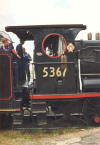
5367 was withdrawn from NSWGR service in
July 1972 at the age of 58 years and with 2,174,613 km travelled.
Fortunately, it escaped the scrap man, instead being sold for the Lachlan
Vintage Village at Forbes and later sold to the Lachlan Valley Railway at Cowra.
It has been based at the LVR’s Cowra Roundhouse Museum for many years and has
been available for rail tour & enthusiast operations for lengthy periods
while cared for by LVR volunteers. 5367 is currently displayed in the Cowra
Roundhouse while it awaits overhaul. |
|
|
5461 |
|
(D)53 |
2-8-0 |
Clyde Engineering 210 of 1916 |
Static |
5461
was an operational
exhibit at the NSWRTM during the 1970's and was a stalwart of the operational
fleet in the early 1980’s. 5461 was withdrawn from NSWRTM operational duties
in 1985 and placed on static display. Change came in 1996 when 5461 was
transferred to the Valley Heights Locomotive Depot Museum where it is
statically displayed paired with the last remaining 4,000 gallon ‘Wampu’
tender as supplied with the (D)55 class. |
|
|
5595 |
|
(D)55 |
2-8-0 |
Clyde Engineering 334 of 1924 |
Static |
Thirlmere |
5595
is the sole survivor of 120 examples of the (D)55 class variant of the
NSWGR’s Standard Goods locomotives. 5595 was withdrawn from service in 1967
had been somewhat derelict by 1975 when transferred to the New South Wales
Rail Transport Museum (NSWRTM) at Thirlmere, however it was restored as a
static exhibit during the late 1990's by NSWRTM volunteers. It is currently
paired with the Standard Turret Tender formerly attached to 5461, rather than
its original ‘Wampu’ tender. |
|
5711 |
|
(D)57 |
4-8-2 |
Clyde Engineering 435 of 1930 |
Under static restoration |
5711
is one of the most significant preserved steam locomotives in Australia,
being the last of the NSWGR's ‘big engine’ 4-8-2 heavy freight locomotives
introduced from 1929. 5711 is slowly being statically restored at Valley
Heights, with initial focus on the tender; the loco is temporarily paired
with a 36-class tender (tab 3617) while its own is under repair. |
|
|
58-class |
|
(D)58 |
4-8-2 |
NSWGR Eveleigh & Cardiff Workshops |
Components only |
Thirlmere |
The (D)58 class was designed as an
improved version of the earlier (D)57 class, featuring 3 cylinders but using
rack-and-pinion valve timing instead of Gresley conjugating valve gear. Today
only a few components survive, but
they make interesting artefacts showing aspects of steam locomotive
construction. |
|
5908 |
|
(D)59 |
2-8-2 |
Baldwin Lima Hamilton 75571 of 1952 |
Display |
5908
is one of 20 (D)59 class goods engines ordered by the NSWGR to the design of
the USATC ‘S200’ war locomotive. The class were delivered as oil burners in
response to the 1949 coal strikes, although most were later converted to coal
firing during the 1960’s. 5908 remains in its original oil burning
configuration and survived into preservation following a period of use as a
stationary boiler. It was displayed at the NSWRTM Thirlmere from 1977 to
2009, at which stage it was relocated the Goulburn Rail Heritage Centre. In
recent years the old boiler lagging has been removed by specialist
contractors and 5908 has since been repainted by volunteers for static
display at the Goulburn Rail Heritage Centre. |
|
|
5910 |
|
(D)59 |
2-8-2 |
Baldwin Lima Hamilton 75573 of 1952 |
Display |
Thirlmere |
5910
represents the coal-fired conversion of (D)59 class locomotive in the NSWRTM
collection. 5910 was the last of the class in revenue traffic when withdrawn
from NSWGR service in August 1972 and went on to become a tour loco. It
received a comprehensive overhaul at the NSWRTM Thirlmere from 1981 to 1985
and subsequently travelled widely until withdrawn around 1998 due to boiler
condition. 5910 has since been statically displayed. |
|
5916 |
|
(D)59 |
2-8-2 |
Baldwin Lima Hamilton 75579 of 1952 |
Stored |
Chullora Heritage Hub NSW) |
5916
survived into preservation following use as a stationary boiler until 1977,
arriving at the NSWRTM Thirlmere as late as 1980. Old boiler insulation
material was removed by specialist contractors in 2008, although the boiler
clothing was not refitted. From 2009 loco 5916 was stored at the Goulburn
Rail Heritage Centre, before moving to the Chullora Heritage Hub in July 2024
for undercover storage. |
|
5917 |
|
(D)59 |
2-8-2 |
Baldwin Lima Hamilton 75580 of 1952 |
Operational |
Eveleigh Workshops (on loan to 3801 Ltd from Lachlan Valley Railway) |
5917
is privately owned by a syndicate of people associated with the Lachlan
Valley Railway, Cowra. It has served widely in enthusiast / tour duties over
the decades and has travelled widely through the state, including spells on
hire to the ARHS Canberra and 3801 Limited. For a period in the 1980’s it
wore an attractive but unauthentic lined green livery; at this time it used
the Standard Turret Tender from loco 5367 while its original ‘bobtail’ tender
was repaired. In more recent years it has returned to authentic black livery
with red lining. |
|
5920 |
|
(D)59 |
2-8-2 |
Baldwin Lima Hamilton 75583 of 1953 |
Stored |
Dorrigo |
5920
is stored at Dorrigo for the DSR&M collection. Like other DSR&M
locomotives, it is regularly coated in black oil for weatherproofing. 5920 is
notable as the last of many Baldwin steam locomotives delivered to Australia. |
|
6029 |
|
AD60 |
4-8-4 + 4-8-4 |
Beyer Peacock & Co 7531 of 1954 |
Operational |
Thirlmere (Privately owned) |
6029
has recently been restored to operation by volunteers at the ARHS Canberra.
This restoration has included a boiler change using a spare boiler retrieved
from sawmill use. |
|
6039 |
|
AD60 |
4-8-4 + 4-8-4 |
Beyer Peacock & Co 7541 of 1956 |
Stored |
Dorrigo |
6039
is stored at Dorrigo, where it is regularly coated in black oil for
weatherproofing. |
|
6040 |
|
AD60 |
4-8-4 + 4-8-4 |
Beyer Peacock & Co 7542 of 1956 |
Display |
Thirlmere |
6040
was retained for preservation by the NSWRTM as the last steam locomotive to
enter NSWGR service. It is now a prime exhibit at Thirlmere. |
|
6042 |
|
AD60 |
4-8-4 + 4-8-4 |
Beyer Peacock & Co 7544 of 1956 |
Stored |
Forbes (stored for DSR&M) |
6042
is notable as the last steam locomotive in revenue service for the NSWGR when
withdrawn in 1973. It is stored at the former Lachlan Vintage Village, Forbes
while awaiting transport to Dorrigo. |