|
No. |
Photo |
Class |
Wheel Arrang't |
Builder's No & Year |
Status |
Location |
Notes |
|
South Australian Railways |
|||||||
|
5' 3" Gauge |
|||||||
|
P 117 |
|
P |
2-4-0T |
James Martin 57 of 1893 |
Display |
Port Adelaide |
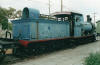
P
117 is displayed undercover at the National Railway Museum, Port
Adelaide. It is an example of the Beyer Peacock & Co 2-4-0T passenger
tank design first supplied to the Isle of Wight Railway. |
|
Rx 5 |
|
Rx |
4-6-0 |
SAR Islington Workshops 13 of 1909 |
Plinthed |
Kapunda |
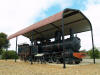
Rx
5 was the first Rx-class locomotive built new to the Rx specification,
rather than rebuilt from the earlier R-class. The Rx-class ultimately
numbered 84 examples and formed the backbone of the South Australian Railways
broad-gauge loco fleet. Rx 5 is plinthed in a park at Kapunda. |
|
Rx 55 |
|
Rx |
4-6-0 |
SAR Islington Workshops 25 of 1913 |
Plinthed |
Loxton |
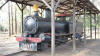
Rx
55 is displayed within a local history museum located on the banks of the
River Murray at Loxton. |
|
Rx 93 |
|
Rx |
4-6-0 |
Dubs 2142 of 1886 |
Display |
Port Adelaide |
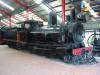
Rx
93 is the oldest of the preserved Rx-class locomotives, and the only
surviving Rx to have originally been built as a
original R-class loco. |
|
Rx 160 |
|
Rx |
4-6-0 |
SAR Islington Workshops 29 of 1913 |
Display |
Murray Bridge (Wharf Area) |
Rx
160 is displayed alongside the Murray River at the old Murray Bridge
wharf area. |
|
Rx 191 |
|
Rx |
4-6-0 |
SAR Islington Workshops 41 of 1916 |
Plinthed |
Victor Harbour |
Rx
191 is plinthed in a playground near the station at Victor Harbour, with
an overhead roof but exposed to salt air from the nearby seaside. Rx 191 has
a stovepipe chimney and an older-style 6-wheel tender which has now been cut
down to the frame (presumably due to corrosion). |
|
Rx 201 |
|
Rx |
4-6-0 |
North British 20152 of 1913 |
Plinthed |
Tailem Bend |
Rx
201 is plinthed in a park at the railway town of Tailem Bend, near to the
historical railway station. It retains its original copper-capped chimney but
has become derelict in its years as a park locomotive. |
|
Rx 207 |
|
Rx |
4-6-0 |
North British 20156 of 1913 |
Operational |
Mt Barker |
Rx
207 is preserved operational by SteamRanger and operates from their Mt
Barker depot. |
|
Rx 217 |
|
Rx |
4-6-0 |
Walkers 245 of 1915 |
Plinthed |
Nuriootpa |
Rx
217 is plinthed in a park at Nuriootpa, north of Adelaide. |
|
Rx 224 |
|
Rx |
4-6-0 |
Walkers 252 of 1915 |
Operational |
Mount Barker |
Rx
224 was originally retained as a railtour engine, together with sister Rx
207. |
|
Rx 231 |
|
Rx |
4-6-0 |
Walkers 259 of 1915 |
Plinthed |
Kadina |
Rx
231 is plinthed in the Apex Park in central Kadina. It is fitted with a
plain stovepipe chimney of the type that appears to have been common in the
final years of SAR steam. |
|
F 245 |
|
F |
4-6-2T |
James Martin 230 of 1915 |
Plinthed |
Gawler |
F
245 has been displayed at Gawler, north of Adelaide, since 1960. In
December 2002 it was relocated from Gawler oval to Gawler railway station for
cosmetic restoration under a 'work for the dole' scheme, with a weather roof
constructed. |
|
F 251 |
|
F |
4-6-2T |
Perry, built 1922 |
Workshop |
Mt Barker |
F 251 was condemned by the South Australian
Railway in July 1962 and placed on display at Elizabeth West Shopping Centre.
It was purchased by the Australian Railway Historical Society (S. A.
Division) in 1981 and transferred to their Dry Creek depot for restoration.
It has since operated on SteamRanger tourist services to Victor Harbour. F
251 was withdrawn from service at the end of 2001 and is now stored awaiting
overhaul. |
|
F 255 |
|
F |
4-6-2T |
Perry, built 1922 |
Display |
Port Adelaide |
The handsome &
well-proportioned F-class 4-6-2T locomotives were designed for suburban
trains around Adelaide. They performed well on suburban trains for many
years, together with shunting duties, until displaced by the ‘Redhen’ Diesel
Multiple Units from the 1950's. F 255
represents the F-class as a static exhibit at the National Railway Museum,
Port Adelaide. |
|
504 |
|
500B |
4-8-4 |
Armstrong Whitworth 637 of 1926 |
Display |
Port Adelaide |
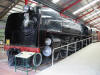
1926 marked the year that the
South Australian Railways received the first American-style ‘big engines’ of
the 500, 600 and 700-classes. The 500-class were built primarily for heavy
passenger duties over the Adelaide Hills and were originally supplied as
4-8-2's. Booster trucks were added in 1929 to make a 4-8-4 wheel arrangement.
Preserved loco 504 was named 'Tom Barr
Smith' by the South Australian Railways and is the only survivor of the
class. |
|
520 |
|
520 |
4-8-4 |
SAR Islington Workshops, built 1943 |
Under Overhaul |
Mt Barker |
The 520 class were introduced from
1943 to provide a powerful locomotive capable of handling passenger turns on
secondary lines; although large engines, the 4-8-4 wheel arrangement and
12-wheel bogie tender spread the weight and hence provided a low axle-load.
Class leader 520 has been maintained by
SteamRanger for many years and is currently under overhaul at their Mt Barker
depot after extensive railtour use during the 1970's and 1980's. |
|
523 |
|
520 |
4-8-4 |
SAR Islington Workshops, built 1944 |
Display |
Port Adelaide |
The 520-class 4-8-4's No.523 -531
feature classic 'shark-nose' streamlining similar to the Pennsylvania
Railroad T1 Duplex locomotives. (The first three locomotives No.520, 521
& 522 featured a somewhat different shark-nose design.) Preserved loco No.523 was named ‘Essington Lewis’ by the South
Australian Railways and is statically displayed within the National Railway
Museum, Port Adelaide. |
|
526 |
- |
520 |
4-8-4 |
SAR Islington Workshops, built 1943 |
Scrapped in 1971 |
- |
526
was scrapped in 1971 after a period of railtour use, being replaced in this
role by 520. Some components remain as spares for 520, notably the driving
wheels. The nosecone (including chimney and road numbers) was apparently also
saved by someone and restored as they were advertised for private sale in
April 2003. |
|
621 |
|
620 |
4-6-2 |
SAR Islington Workshops, built 1936 |
Operational |
Mt Barker |
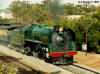
The 620-class ‘Light Pacific’
4-6-2 locomotives were designed by the South Australian Railways to fill a
gap between the 600-class heavy Pacifics on main line duties and the older
Rx-class 4-6-0's and S-class 4-4-0's used on light country lines. Ten 620-class
locomotives were built by the South Australian Railways at Islington
Workshops between 1936 and 1938. 621 has
been cared for by SteamRanger for many years and is based at their Mt Barker
depot. |
|
624 |
|
620 |
4-6-2 |
SAR Islington Workshops, built 1937 |
Display |
Port Adelaide |
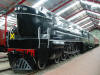
624 was placed on static display at the Mile
End Railway Museum in April 1967. During 1988 it was transferred to the new
Port Dock Station Museum at Port Adelaide (now known as the National Railway
Museum) where it is prominently displayed in the main exhibit hall. |
|
702 |
|
700 |
2-8-2 |
Armstrong Whitworth 645 of 1926 |
Display |
Port Adelaide |
702
is the last survivor of the 700-series of heavy freight locomotives. The
first 700-class 2-8-2 locomotives were 10 examples delivered by Armstrong
Whitworth in 1926, while a further 10 Australian built engines comprised the
now-extinct 710 class. An enlarged 2-8-4 version became the 720-class, while
a further batch of 2-8-2's were the 740-class. |
|
752 |
|
750 |
2-8-2 |
North British 26787 of 1951 |
Display |
Port Adelaide |
752
was originally Victorian Railways N 477 prior to its sale to the South
Australian Railways in 1951 after less than one month of use. It is the only
survivor of the 10 members of the 750 class and is displayed at the National
Railway Museum, Port Adelaide. |
|
South Australian Railways |
|||||||
|
3' 6" Gauge |
|||||||
|
V 9 |
|
V |
0-4-4T |
Beyer Peacock 1597 of 1877 |
Plinthed |
Naracoorte |
V
9 is the oldest preserved South Australian steam locomotive. It is plinthed
at Naracoorte and displayed under a shelter that provides good protection
against the elements, but makes photography rather hard! |
|
Wx 18 |
|
Wx |
2-6-0 |
Beyer Peacock 1820 of 1879 |
Workshops |
Quorn |
Wx
18 had been plinthed in Pioneer Park, Naracoorte since 1959. It was
acquired by the Pichi Richi Railway in 1985 and transferred to Quorn for
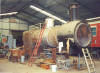
restoration to operation. Wx 18 has been fully dismantled with all parts
cleaned and painted, however restoration progress appears to have stalled.
The frames and other components are currently stored within the Pichi Richi
Railway workshops. |
|
W 53 |
Refer to Commonwealth Railways NF 5 |
||||||
|
W 54 |
Refer to Commonwealth Railways NF 6 |
||||||
|
Y 71 |
|
Y |
2-6-0 |
Beyer Peacock 2762 of 1886 |
Display |
Boyanup, WA |
The SAR Y-class / WAGR G-class 2-6-0 design was popular with WA timber concerns for use on their timber tramways, with many units obtained second hand from the Government railway systems. Among these was Y 71 which was sold to the West Australian Jarrah Forest Co. in 1927. Y 71 was an exhibit at the ARHS Railway Museum, Bassendean for many years, before being relocated to the South-West Rail & Heritage Centre, Boyanup, in April 2023. |
|
Y 82 |
|
Y |
2-6-0 |
Beyer Peacock 2909 of 1888 |
Plinthed |
Peterborough |
Y
82 was withdrawn by the South Australian Railways in 1960 and plinthed at
the Peterborough town pool and playground, where it remained for 40 years. Y
82 was moved to the Steamtown Peterborough workshop in 2000 for cosmetic
restoration. It was then placed on display in the Peterborough town centre. |
|
Yx 86 |
|
Y |
2-6-0 |
Beyer Peacock 2913 of 1888 |
Display |
Bassendean, Perth, WA |
Y
86 was sold for railway building duties on the Oodnadatta to Alice Springs
section of the Central Australia Railway and later purchased by Bunning Bros.
for use in their West Australian timber operations. It was rebuilt to Yx
specification in 1958 by replacing the round-top boiler with a larger, higher
pitched Belpaire boiler. Yx 86 is now
displayed among the locomotive exhibits at the ARHS Railway Museum,
Bassendean. |
|
Y 97 |
|
Y |
2-6-0 |
Beyer Peacock 3147 of 1890 |
Display |
Port Adelaide |
Y 97 was known as Peterborough shunter
and features in many enthusiast photos of the Peterborough roundhouse in the
1960's. It featured on some ARHS railtour duties towards the end of the steam
era and was the last Y-class in service when withdrawn by the South
Australian Railways in May 1970. |
|
107 |
Refer to Commonwealth Railways NA 1 ‘Sandfly’ |
||||||
|
Y 109 |
|
Y |
2-6-0 |
James Martin 8 of 1890 |
Plinthed |
Manjimup, WA (timber museum) |
Y
109 was sold into the West Australian timber industry, where it was
heavily rebuilt using a combination of SAR Y-class and WAGR G-class
components, with a WAGR A-class 4-wheel tender. |
|
Yx 135 |
Yx 135 was transferred to the Commonwealth Railways in
1943 for WW2 duty on the North Australia Railway. It was renumbered NFB 88. |
||||||
|
Yx 141 |
|
Yx |
2-6-0 |
James Martin 43 of 1892 |
Operational |
Quorn |
Yx
141 had been plinthed in a park at Port Lincoln until 1983, when it was
acquired by the Pichi Richi Railway and transferred to Quorn. It has since
been comprehensively rebuilt in the Pichi Richi Railway workshops. A crack
was discovered in one of the cylinders during the final stages of the
locomotive’s overhaul, which required a replacement to be cast, but the
restoration team overcame this setback and Yx141 has now been returned to
operation. |
|
Yx 176 |
|
Yx |
2-6-0 |
James Martin 178 of 1898 |
Stored |
Yarloop Steam Workshops, Yarloop, WA |
Y
176 was sold by the South Australian Railways in 1937 to Bunning Brothers for
use in the West Australian timber industry. It was rebuilt by Bunnings from Y
to Yx specification in 1956. Yx 176 is now located at
the excellent Yarloop Steam Workshop (within the former timber mill) and displayed
together with a good collection of operating steam machinery. Alas the
magnificent Yarloop Steam Museum was destroyed by bushfire in January 2016
but reconstruction of the museum is now underway. In the meantime, fire
damaged Yx 176 is stored in a compound nearby. |
|
SMC No.1 |
Steam Motor Coach No1; refer to Commonwealth Railways NJAB 1 ‘Coffee Pot’ |
||||||
|
Z 199 |
|
Z |
4-4-0 |
Replica |
Under Construction |
Quorn |
The Z-class passenger locomotives
comprised 10 examples which, although built in Australia, appear to be to a
classic Beyer-Peacock design for contemporary passenger locomotives.
Unfortunately, none of the SAR Z-class survived into preservation, however a
replica numbered Z 199 is under
construction. As of January 2026, the end is in sight for this fascinating
and ambitious new-build project, with the locomotive chassis and tender
complete. Boiler design was also complete and construction well underway,
with the boiler barrel having been rolled and welded to the outer firebox
shell. |
|
T 181 |
|
T |
4-8-0 |
James Martin 182 of 1904 |
Display |
Sulphide St Railway & Historical Museum, Broken Hill, NSW |
T
181 survived into preservation after being swapped by the SAR for Silverton
Tramway locomotive W23 and later donated by the Silverton Tramway Co. T 181
had been plinthed in Imperial Park, Broken Hill during the 1970's but later
moved to the excellent railway museum at the former Silverton Tramway station
at Sulphide St, Broken Hill. |
|
T 186 |
|
T |
4-8-0 |
James Martin 198 of 1909 |
Stored |
Quorn |
T 186 was maintained for many years as an operational locomotive at the Pichi Richi Railway, Quorn, where it provides authentic motive power for tourist trains through the Pichi Richi Pass. T 186 is an oil burner and wears lined black livery. T 186 was withdrawn from regular PRR service in early 2000 and is currently stored pending mechanical and boiler repairs. |
|
T 199 |
|
T |
4-8-0 |
James Martin 201 of 1912 |
Display |
Peterborough |
T
199 was plinthed at Peterborough for some years prior to being
transferred into the roundhouse by the Steamtown organisation. T 199 has now
been statically restored and is displayed in the workshops at Steamtown
Peterborough. |
|
T 224 |
|
T |
4-8-0 |
Walkers 224 of 1914 |
Display |
Millicent |
T
224 is an exhibit in the Millicent museum; this excellent regional museum
is administered by the National Trust. T 224 is displayed in a recreated
goods shed, which provides good cover from the elements. |
|
T 251 |
|
T |
4-8-0 |
Walkers 276 of 1917 |
Operational |
Queenscliff, Victoria |
T
251 has been extensively rebuilt and recently returned to operation at
the Bellarine Railway. |
|
T 253 |
|
T |
4-8-0 |
Walkers 278 of 1917 |
Display |
Port Adelaide |
T
253 is displayed at the National Railway Museum, Port Adelaide. |
|
ASG |
|
300 (ASG) |
4-8-2 + 2-8-4 |
Various |
- |
- |
The SAR obtained six Australian Standard
Garratt (ASG) locomotives second-hand from the WAGR in 1952. These became
300-class locos 300-305 and worked for a few years as a stop-gap for the
coming 400-class Beyer-Garratts. While no ASGs are preserved in SA, sister G33 survives in Victoria. |
|
402 |
|
400 |
4-8-2+2-8-4 |
Societe Franco F2975 of 1953 |
Stored |
Lithgow, NSW |
The 400-class Beyer-Garratt
locomotives were purchased for the heavy Broken Hill (Cockburn) to Port Pirie
ore trains. Beyer Peacock & Co copied the proven East African Railways
‘60-class’ design, with construction subcontracted to Societe Franco-Belge,
France. 402 was retained at Peterborough
for several years before moving the to Zig Zag
Railway in 1976. |
|
409 |
|
400 |
4-8-2+2-8-4 |
Societe Franco F2982 of 1953 |
Display |
Port Adelaide |
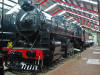
409
was displayed from November 1970 at the open-air Mile End Railway Museum,
Adelaide. All Mile End exhibits transferred to the new National Railway
Museum, Port Adelaide in 1988 and 409 is now a prime exhibit at Port
Adelaide, displayed in the main exhibit hall in unlined black livery. |